


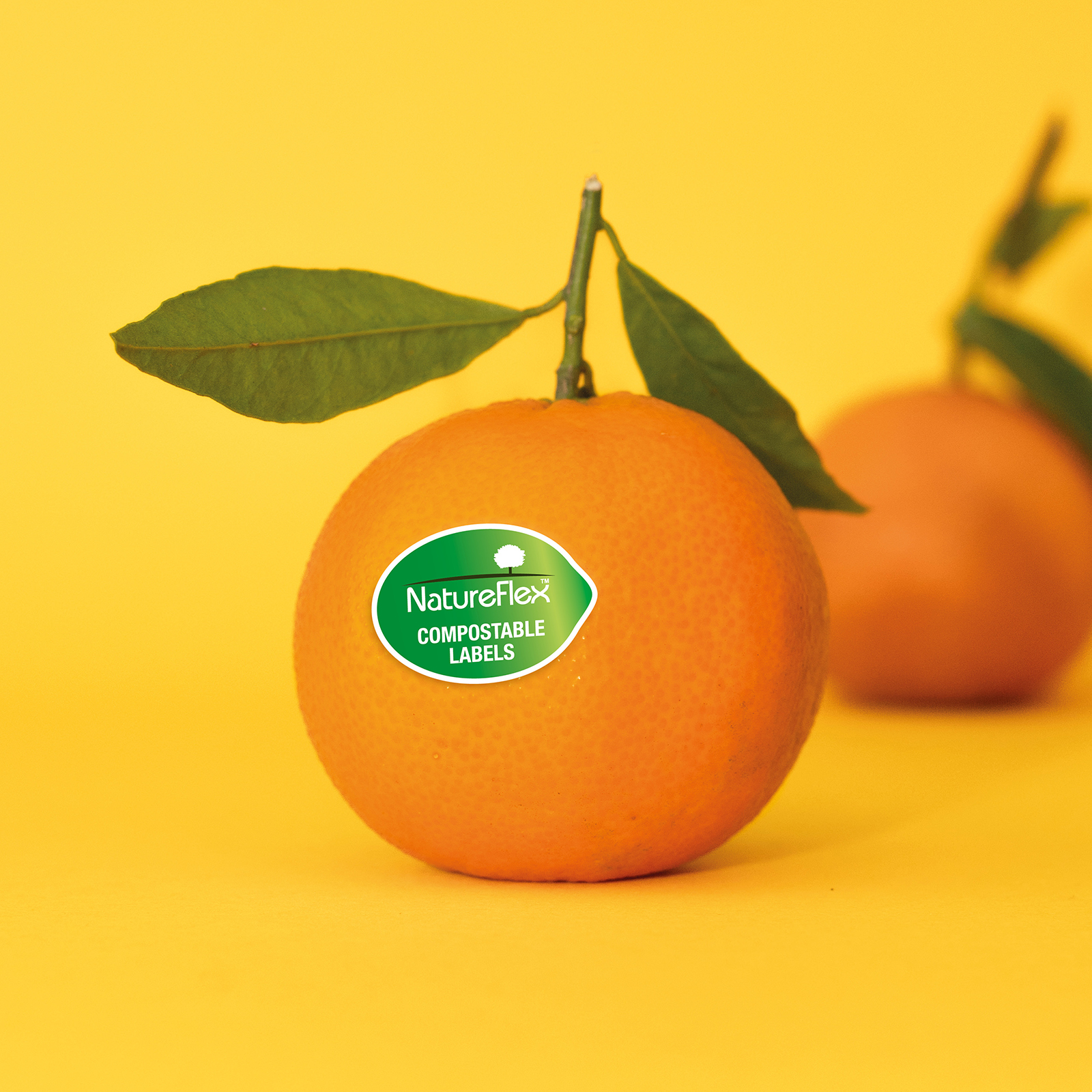
Der britische Folienhersteller Futamura und der niederländische Haftmaterialhersteller Bio4life geben heute einen neuen Durchbruch bei der Obstkennzeichnung bekannt: ein zertifiziertes, zu Hause und industriell kompostierbares Haftetikett, das Einzelhändlern und Verpackungsbetrieben helfen soll, herkömmliche Kunststoffaufkleber von frischem Obst und Gemüse zu eliminieren.
Together, the two companies offer the required elements for a home compostable label : on one hand, Futamura’s NatureFlex™ cellulose films provide the home compostable facestock; on the other hand, Bio4life’s technology delivers the required certified home compostable adhesive. The outcome is a high-performance label that is renewable, food-safe, and compatible with both industrial and home composting systems, as well as being suitable for a range of fresh produce such as apples, citrus fruits, avocados and kiwis.
Traditionell hergestellte Haftetiketten verwenden fossile Kunststoffe und nicht kompostierbare Klebstoffe, was sie zu einem Kontaminationsrisiko in Bioabfallströmen und anaeroben Vergärungsprozessen macht. Dies liegt daran, dass Verbraucher das Etikett zusammen mit den Obst- und Gemüseschalen entsorgen. Da die Aufkleber zu klein sind, um aussortiert zu werden, und die meisten anderen Materialien, insbesondere herkömmliche Kunststoffe, sich unter anaeroben Bedingungen nicht zersetzen, kann dies zu einer Verunreinigung des Gärrests führen. Obst- und Gemüsetiketten hergestellt unter Verwendung von
NatureFlex™ films are suitable for anaerobic digestion, breaking down in the process and therefore, do not contaminate it.

The new compostable PSA label engineered with both technologies meets the growing demand for environmentally responsible packaging solutions. Bio4Life deliver certified home and industrial compostable label stock, without compromising performance, printability, or application efficiency. NatureFlex™ films provide a renewable, cellulose-based face stock derived from responsibly managed wood pulp. The films are available in clear, white or metallised variants to fit all client requirements. Their mechanical properties make them well suited to die-cutting and dispensing. Being stiffer than other bio-based and compostable alternatives, they can be used in thinner grammage, whilst still maintaining excellent machineability. They showcase excellent printability to achieve a highly decorative finish and great adhesive key. Cellulose films are inherently anti-static which aids the machineability of the film through conversion. NatureFlex™ cellulose films also have a high barrier to oils and chemicals, which can prevent any transfer through the label, preserving the quality of the label over time.
Der Countdown bis zum Inkrafttreten der Verordnung über Verpackungen und Verpackungsabfälle (PPWR) am 12. Februar 2028 macht den Übergang zu vorgeschriebenen kompostierbaren Etiketten für Obst und Gemüse dringlich, da der Frischwarensektor nun nur noch einen verbleibenden Erntezyklus vor sich hat, um Versuche und Tests abzuschließen. Dieser begrenzte Zeitrahmen verdeutlicht die Notwendigkeit einer engen Zusammenarbeit entlang der gesamten Lieferkette, um sicherzustellen, dass vollständig konforme Lösungen vor den PPWR-Anforderungen erprobt, getestet und einsatzbereit sind.

“Kompostierbare Obst- und Gemüseetiketten sind eine großartige Innovation, die eine echte Kreislaufwirtschaft unterstützt. Bio4life und Futamura teilen eine gemeinsame Vision für die Zukunft der Etikettierung, und wir hoffen, Marken und Einzelhändlern dabei zu helfen, von konventionellen Kunststoffen auf erneuerbare und kompostierbare Etikettenmaterialien umzusteigen.’
“Our home compostable adhesive technology BioTAK® is designed to work hand-in-hand with renewable home compostable substrates like NatureFlex™. This partnership showcases how collaboration can accelerate the shift toward packaging that supports a circular economy. We’re proud to bring this innovation to market with Futamura.”