


Don’t lose your Natural Sparkle – Navigating Glitter Legislation with NatureFlex™
Alors que la saison des festivals bat son plein, nous nous concentrons dans ce numéro sur un petit produit qui offre des performances éblouissantes. Les paillettes.
Vous pourriez vous demander pourquoi un fabricant connu pour ses films d'emballage cellulosiques parle d'un produit plus couramment associé aux arts et à la création. Mais saviez-vous que les paillettes fabriquées industriellement sont généralement à base de plastique ?
Ces minuscules particules décoratives ont fait l'objet d'un examen de plus en plus minutieux ces dernières années en raison de leur contribution, bien que minime mais très visible, à la pollution par les microplastiques. Pour comprendre pourquoi, commençons par une question essentielle : qu'est-ce qu'un microplastique exactement ?
Mettre des paillettes au microscope
Les microplastiques sont de minuscules morceaux de plastique définis comme des polymères synthétiques solides mesurant moins de 5 mm de long (ou moins de 15 mm de long s'il s'agit d'une fibre).1.
Ils peuvent être créés intentionnellement et non intentionnellement. Beaucoup de gens connaissent la dégradation des grands objets en plastique au fil du temps, ce qui entraîne la pollution des écosystèmes par des fragments de microplastiques non intentionnels. Cependant, les microplastiques sont également fabriqués délibérément pour des utilisations spécifiques.
Ils sont intentionnellement utilisés dans une large gamme d'applications; des enrobages protecteurs de semences en agriculture, aux agents de contrôle de la brillance dans les peintures, et aux agents de texture dans les formulations cosmétiques. Les paillettes entrent également dans cette catégorie, les qualités commerciales variant généralement de 0,05 mm à 6,35 mm. 2,11.
Vous pourriez penser que quelque chose d'aussi petit ne peut pas créer un problème important, mais un rapport publié par l'Agence européenne des produits chimiques (ECHA) en 2020 suggère que 42 000 tonnes de microplastiques intentionnellement présents sont rejetées dans l'environnement chaque année dans l'Espace économique européen seulement.3. Cela équivaut à un nombre colossal de minuscules particules de plastique qui pénètrent dans notre environnement chaque année.
Cette préoccupation croissante a conduit l'UE à introduire une législation restreignant l'utilisation de microplastiques ajoutés intentionnellement, entrée en vigueur en octobre 2023.¹ Les paillettes plastiques lâches figuraient parmi les premiers articles à être progressivement éliminés. Leur classification comme microplastique prêt à l'emploi, leur objectif largement décoratif (plutôt que fonctionnel) et la disponibilité d'alternatives plus respectueuses de l'environnement ont placé les raisons d'utiliser les paillettes plastiques industrielles sous le microscope.4.
Petites Particules, Gros Titres
Bien que l'UE ait pris des mesures décisives concernant les microplastiques et les paillettes, il y a une prise de conscience croissante de l'impact des paillettes sur l'environnement dans le monde entier. 5.
Que des chercheurs aient découvert une concentration significativement plus élevée de microplastiques sur les plages du Brésil pendant le carnaval de Rio 7, dans l'Illinois aux États-Unis où un projet de loi vise à s'attaquer aux microplastiques, y compris les paillettes à base de plastique 6, l'attention se intensifie dans le monde entier.
Que ce soit utilisé dans les cosmétiques comme paillettes pour le corps ou les cheveux et le maquillage, ou comme ornements dans les marchés des arts et de l'artisanat, la nature du produit signifie que les paillettes finiront probablement dans les eaux usées lorsqu'elles seront lavées du corps ou nettoyées des tables d'artisanat.
Actuellement, dans le cadre de la législation de l'UE, les paillettes conventionnelles à base de plastique peuvent encore être utilisées dans les cosmétiques en raison d'une période de transition convenue dans le cadre du règlement sur les microplastiques. Cependant, une fois cette période terminée, les applications cosmétiques ne seront plus non plus autorisées à utiliser des paillettes en plastique.
Alors, assistons-nous à la fin des paillettes ?
Impact scintillant
Avant de répondre à cela, il convient de réfléchir à la raison pour laquelle les paillettes ont un attrait si durable.
Les paillettes sont utilisées depuis (littéralement) des siècles pour créer un attrait accrocheur, qui se démarque sur les étagères et sur la personne. Historiquement, elles n'étaient pas toujours à base de plastique. Les premiers effets scintillants étaient obtenus à l'aide de matériaux naturels tels que des minéraux, des cristaux et même des scarabées écrasés. 11.
Nous avons clairement déployé de grands efforts pour ajouter de l'éclat à nos vies, mais avez-vous déjà réfléchi à pourquoi les humains aiment les choses brillantes et scintillantes ? Bien que cela puisse sembler purement esthétique, certains chercheurs suggèrent que notre attraction pour les objets brillants est liée à un instinct inné associé à la recherche d'eau. 8, 9. L'envie de se diriger vers un scintillement aperçu au loin peut faire appel à un instinct de survie précoce, car nous relions cela à la réflexion de la lumière du soleil sur une étendue d'eau.
Les humains pourraient être prédisposés à être attirés par les paillettes, mais c'est aussi quelque chose que nous avons utilisé pour faire une déclaration. Que ce soit dans la mode, l'art, la musique, la protestation ou la protection, les paillettes ont été utilisées pour repousser les limites et amplifier l'impact bien au-delà de la simple décoration. 10,11.
Le monde pourrait perdre un peu de sa magie sans paillettes, mais nous ne pouvons pas continuer à utiliser des paillettes à base de plastique au détriment de la planète. Alors, comment pouvons-nous préserver notre éclat tout en réduisant notre impact environnemental ? Comment apporter de l'éclat de manière responsable ?
Redonner à vos produits leur éclat naturel
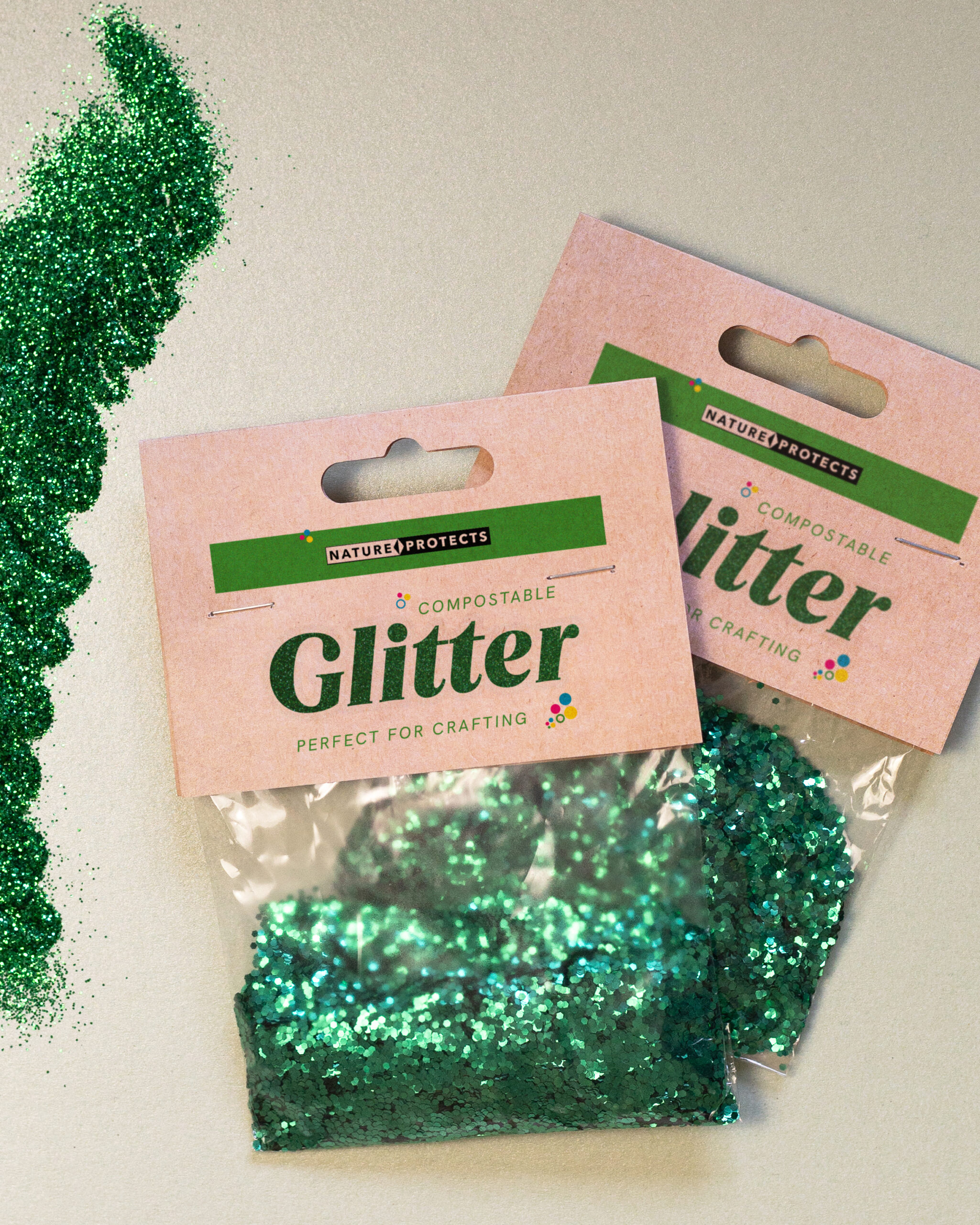
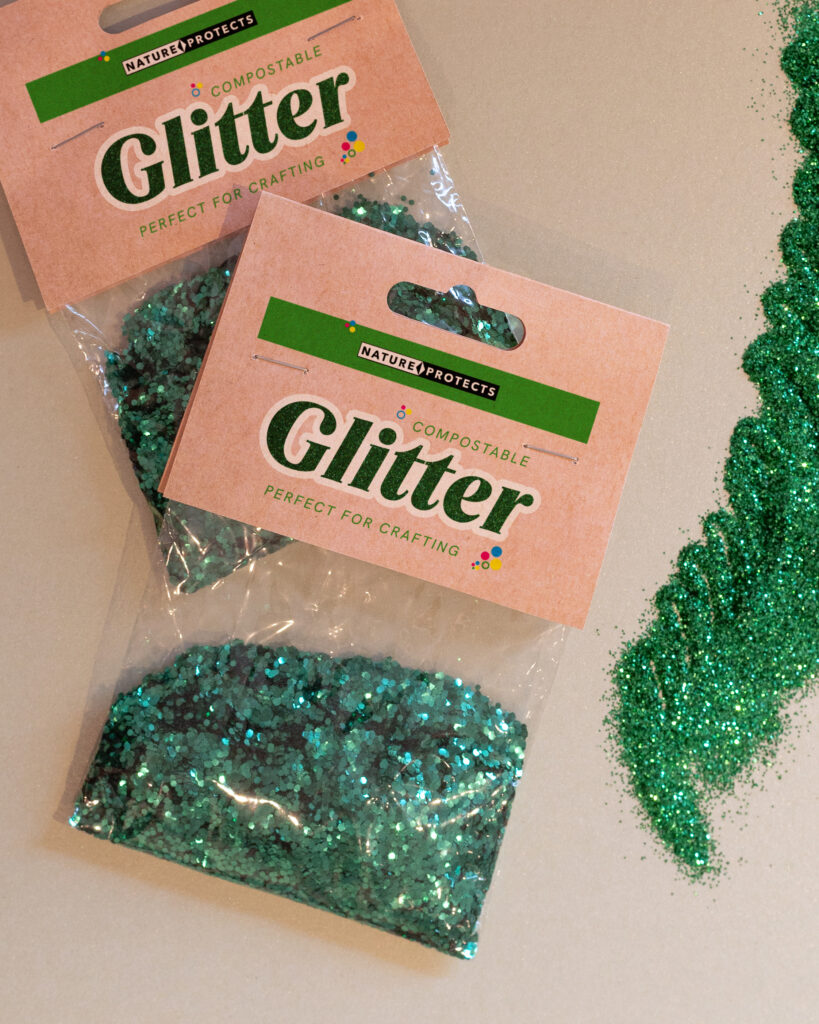
Futamura can offer an alternative solution to help to reduce the microplastics generated from plastic glitter products. Glitter can be based on NatureFlex™ films which are produced from cellulose made from renewable wood pulp, harvested from responsibly managed plantations, because EU legislation provides exemptions for materials that are biodegradable, soluble, natural, or inorganic, meaning they are not classified as microplastics under the regulation. NatureFlex™ films meet these criteria, having demonstrated biodegradability in wastewater, as well as in marine and soil environments.
Une fois utilisée, la paillette certifiée fabriquée à partir de ces matériaux se biodégradera sans danger dans son environnement d'élimination, améliorant considérablement les références environnementales d'un produit. Cependant, il est important de s'assurer que le produit pailleté final lui-même est certifié, car la conformité dépend de la formulation complète répondant aux normes de certification.
As well as marine and wastewater biodegradability, NatureFlex™ films meets all the relevant standards for industrial composting, including AS4736, EN13432 and ASTM D6400. They are also certified for home composting according to the Australian home composting standard AS5810, to the French standard, NF T51-800, by Din Certco and to OK Compost Home protocol.
The NatureFlex™ range also offers functional versatility: grades can be coloured, metallised, and holographically embossed, while benefiting from inherent anti-static properties. In this way, our cellulose-based films can restore a natural shine to glitter, sparkling when needed and biodegrading when washed away.
Pour en savoir plus sur NatureFlex™ et Futamura, visitez-nous à https://www.futamuragroup.com/ ou contactez-nous via info@futamuragroup.com pour discuter de votre patch de fenêtre avec nous directement.
Références
- Règlement – 2023/2055 – EN – EUR-Lex
- Comprendre les tailles et choisir la bonne – Luminosité – Luminosity Glitter®
- Microplastiques_Annexe XV_Rapport de restriction
- Règlement (UE) 2023/2055 de la Commission – Restriction des microplastiques ajoutés intentionnellement à des produits – Marché intérieur, Industrie, Entrepreneuriat et PME
- Les paillettes décoratives contribuent à la pollution mondiale par les microplastiques
- Un élu de l'Illinois propose l'interdiction des paillettes corporelles non biodégradables – The Columbia Chronicle
- ‘ Il doit y avoir des paillettes ’ : le carnaval de Rio peut-il renoncer à son amour des microplastiques polluant les plages ? | Océans | The Guardian
- Aimer ce qui brille : Comment la préférence pour le brillant découle d'un besoin inné d'eau – ScienceDirect
- Pourquoi les humains aiment-ils les choses qui brillent ? | New Scientist
- Les Chroniques de la Paillette : Une Brève Histoire de la Paillette – Projekt Glitter
- Paillettes – Wikipédia